Comprehensive antibody intelligence to evaluate, rank order, and engineer biotherapeutics. Identify and design stable, developable candidates, and eliminate liability risks early.
Customizable scoring across Fv regions, stability measures, surface features, PTMs, humanness, and pI for cross-trait candidate rank ordering.
Evaluate structure-based alignments, clading, detailed liabilities with structure mapping, germline, humanness details, positional residue predictions, and more.
Humanize with automated residue exclusions, optimize with automated variant designs and structure-guided humanness and pI redesign, and track engineering decisions.
Build full-length IgGs, multi-specifics, scFvs, CrossMabs, Fc modifications, and user-guided designs.
Pursuing a poorly behaving antibody is one of the most expensive mistakes in drug discovery.
Sequence and structural analysis and optimization minimizes this risk.
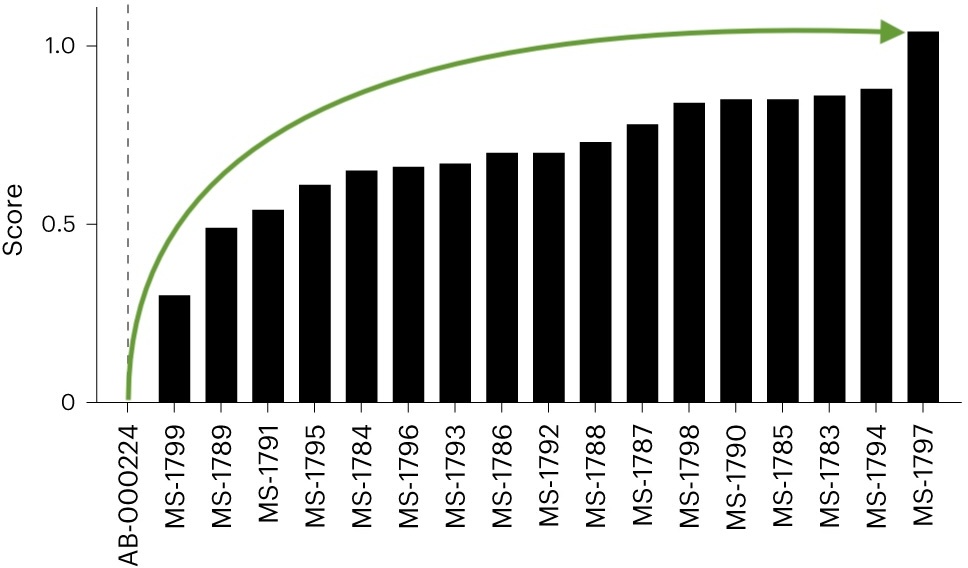
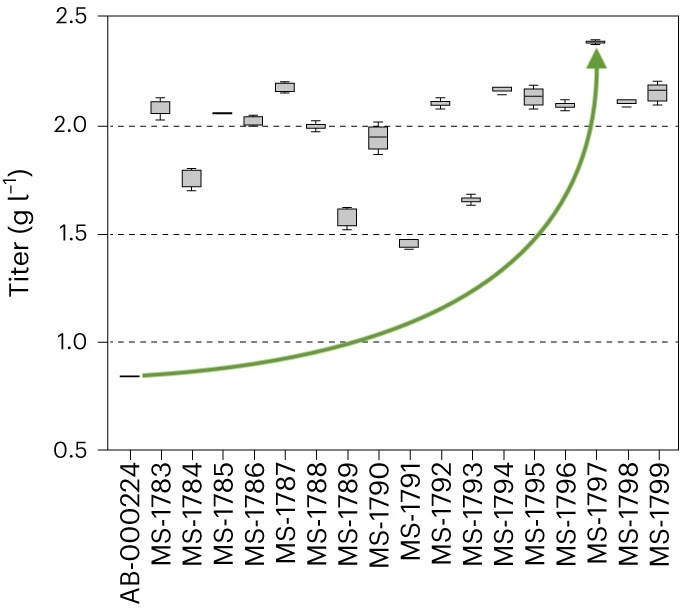
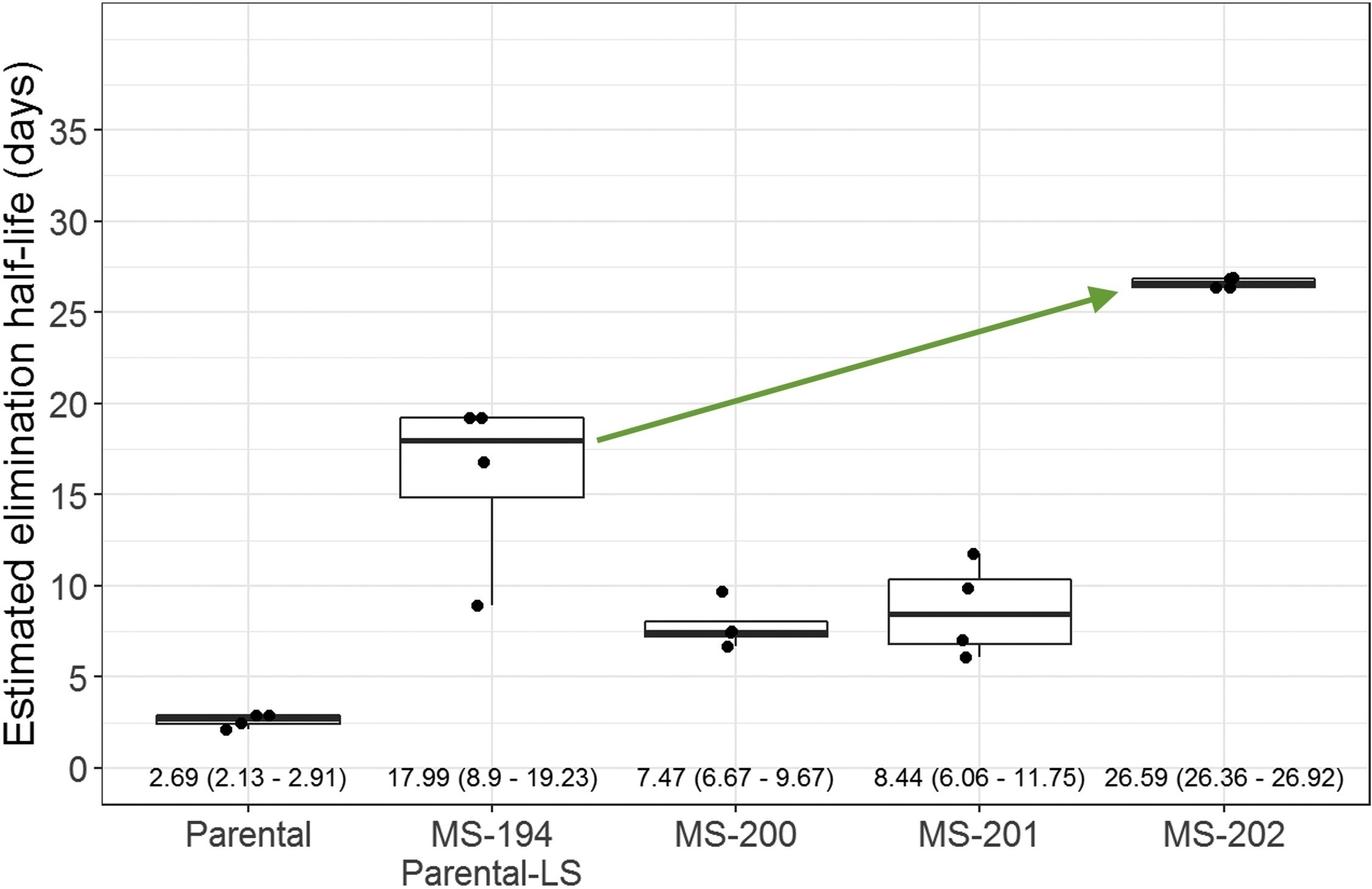
Empirical validation proves the case for early stage developability optimization.
Evaluate antibody sequences across a wide range of developability attributes and predictive machine learning models to rank order and select lead candidates.
Design, evaluate, and build optimization variants, combinatorial libraries, and humanized candidates directly within the workspace.
Interactive dashboards and discovery tools for multi-parameter exploration, phylogenetic diversity, structural mapping, and compliance.
Review in-depth technical briefs detailing the algorithms, developability metrics, competitive advantages, and workflow architectures across each AbLead analytical module.
Download the executive portfolio covering the AbLead antibody analysis and engineering pipeline in a single document.
Directly ingest FASTQ, FASTA, and multi-file ZIP archives. Automated Phred QC scoring, 7-region IMGT completeness checks, format auto-detection, and multi-round biopanning enrichment kinetics.
View BriefMulti-attribute discovery dashboard combining sequence, structure, humanness, and assay data. Customizable KBC scoring presets, live directional formatting, and formula-intact Excel exports.
View BriefStructural precision numbering (IMGT, Kabat, Aho, Martin), stacked amino acid Sequence Logos, closest germline baseline tracking, and integrated developability liability overlays.
View BriefHierarchical cladograms with unmutated common ancestor (UCA) germline rooting, real-time distance cutoffs, and parsimonious mapping of ancestral vs. private sequence liabilities.
View BriefComprehensive chemical degradation and PTM motif detection (Satlawa et al. 2024), antibody language model stability penalties (AbLang, AbLang2, IgBert), and synchronized 3D structure mapping.
View BriefFramework-first deterministic germline assignment across 10 species. Multi-domain dissection (Leader, V, J, Constant) and automated IgG subclass and human allotype calling.
View BriefMitigate Anti-Drug Antibody (ADA) risks by combining OASign repertoire humanness with RPEMHC DeepMHCII physical presentation across 11 core global Class II HLA-DRB1 alleles.
View BriefStatistical amino acid frequencies from >127 million human antibodies coupled with four antibody transformers (Sapiens, AbLang, AbLang2, IgBert) and synchronized Mol* 3D rendering.
View BriefPredict formulation risks directly from 3D structures. Measures spatial surface hydrophobicity (SPH), positive (SPP) and negative (SPN) charge patches, and electrostatic dipoles.
View BriefContextualize candidate biophysical metrics against 584 clinical-stage antibodies from Thera-SAbDab and Jain et al., providing statistical percentile boundaries for drug-likeness.
View BriefCapture and retain wet-lab assay learnings anchored to IMGT residue positions. Displays universal cross-tool warning pins to prevent re-testing failed experimental modifications.
View BriefZero-error construct building with batch constant domain stitching and multispecific drag-and-drop mode supporting Knobs-into-Holes, CrossMabs, linkers, and Fc silencing mutations.
View BriefDeterministic germline template matching and BioPhi Sapiens AI humanization with structural exclusions protecting CDR loops, Vernier zones, and nanobody VHH interfaces.
View BriefUnified mutation tracking, deep mutational scanning (DMS) permissibility badges, combinatorial library generation, and 1-click First Pass Optimize automated liability remediation.
View BriefShift pI for formulation stability, serum particulation prevention, and bispecific purification using Bjellqvist titration, PROPKA 3 electrostatics, and real-time humanness gating.
View BriefNo per-seat penalties. Pay only for peak simultaneous capacity while granting your entire discovery team individual logins, personalized audit trails, and collaborative workspaces.
Flexible floating capacity for biotherapeutic discovery teams
Traditional named-user biotherapeutic software creates artificial barriers that lock out occasional users and cross-functional teammates. AbLead's floating Token model fixes this.
Onboard your entire team—computational biologists, bench scientists, protein engineers, and leadership—with no per-seat surcharges.
Each Token allows one actively logged-in user at any given moment. Tokens float dynamically across your organization in real time.
If all tokens are in use, teammates see a real-time status card showing who is logged in and idle duration (e.g. "Active 3m ago") to coordinate handoffs.
Eliminate risky shared credentials. Every scientist maintains their own password, WebAuthn Passkeys, 2FA, and granular project audit log.
| Feature | AbLead Token Model | Traditional Per-Seat Licensing |
|---|---|---|
| User Account Creation | Unlimited authorized accounts | Strictly limited to paid seats |
| Occasional & Part-Time Users | Included at no extra cost | Must purchase dedicated licenses |
| Billing Basis | Peak concurrent active users | Total registered individual users |
| Team Collaboration | Frictionless cross-functional sharing | Siloed access due to seat limits |
| Credential Sharing | Eliminated (individual accounts) | Frequent (security risk to avoid fees) |
| Seat Reallocation | Dynamic and automatic in real time | Requires manual admin reassignments |
Discover how AbLead accelerates biotherapeutic lead optimization, developability assessment, and antibody engineering. Fill out the form below to schedule a personalized walkthrough.
Prefer direct contact? Email us at ablead@ketchemconsulting.com or connect on LinkedIn.